
Der Raum diktiert die Größe/The space dictates the size
DieResidenz/ Berlin, 2026
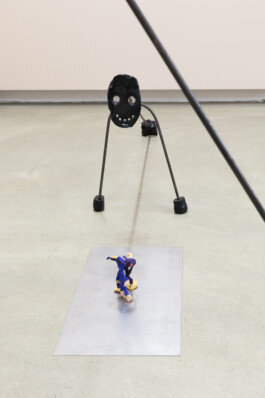
She leaps for joy. With this image, Magda Stützer-Tóthová invites viewers on the exhibition poster to the vernissage at DIEresidenz Berlin, where she — as an artist with a child — was given a studio space and an apartment for four weeks.
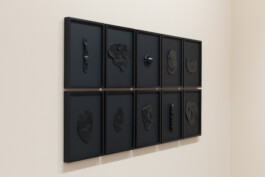
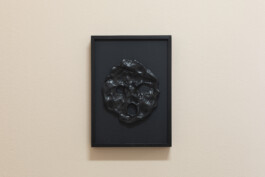
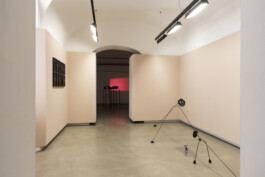
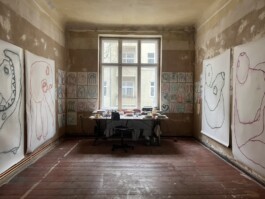
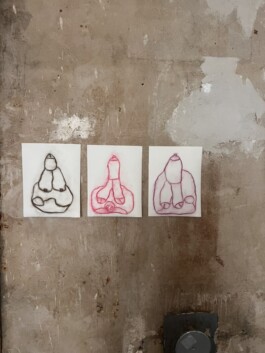
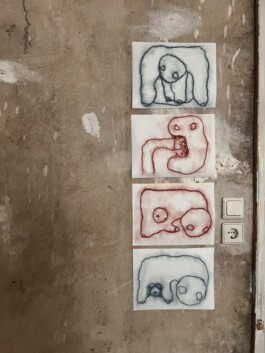
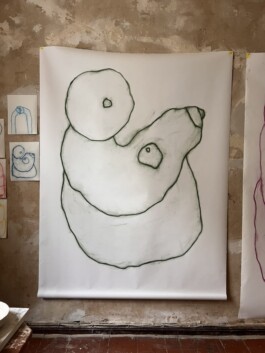
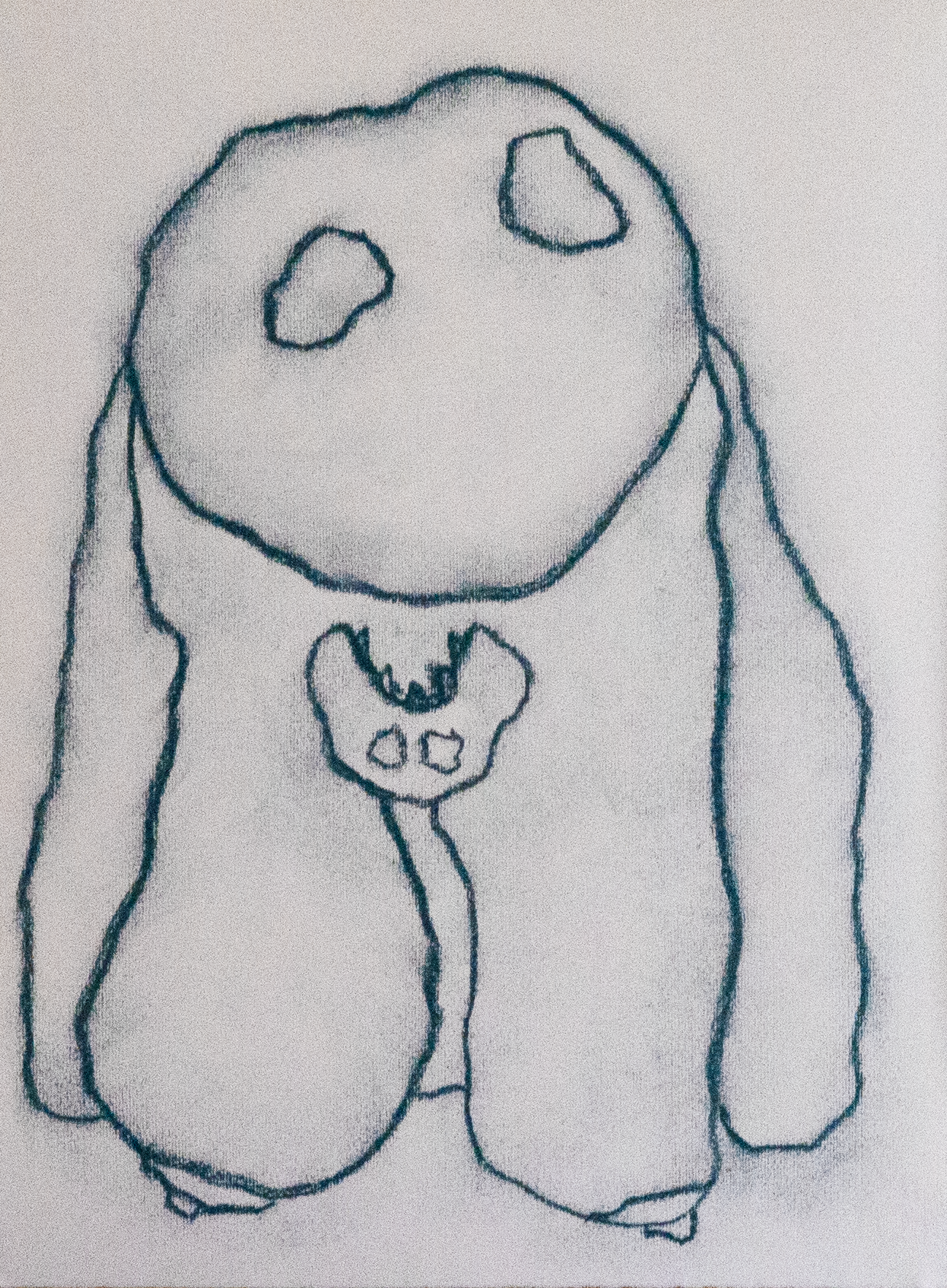
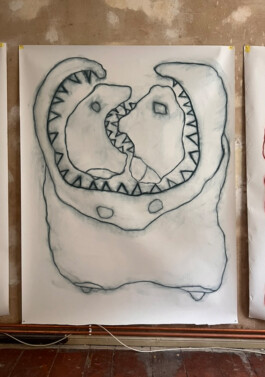
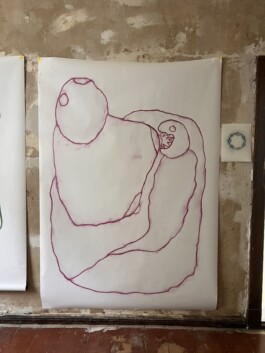
In the exhibition space, a large number of small drawings hang in a grid alongside near-life-sized images. The works created during her residency in Friedenau show organically rendered silhouettes, ranging in their degree of abstraction from biomorphic, cell-like forms to stylized heads in frontal or profile view. Usually only one or two colors are used per drawing. Alongside outlines, a few human features are worked out — such as hanging breasts with nipples, or eyes that always appear somewhat horrified.
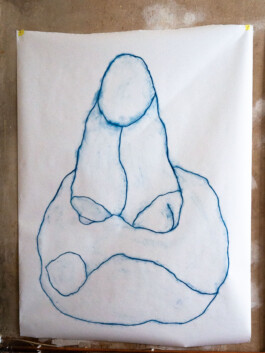
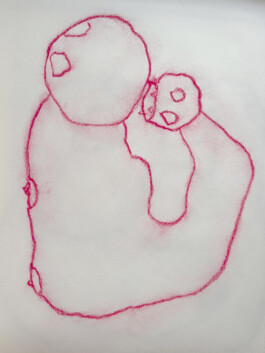
The drawings, reduced to a few basic forms, are reminiscent of Willi Baumeister, who in Das Unbekannte in der Kunst proclaimed his search for so-called "primal forms," which he placed as culturally and temporally universal building blocks before any concrete depiction of a human body. But while his drawings were oriented toward harmony in composition and the relationship between pictorial elements, Stützer-Tóthová's figures devour, circle, and bite each other in an almost cannibalistic way. Whether in a high degree of abstraction - as in the drawing where three cell-like forms attempt to engulf one another - or more figuratively, with wide-open mouths and bared teeth seemingly about to bite into a penis, the figures are locked in a struggle. A struggle in which they are in unmistakably close relationship to one another, needing each other and consuming each other simultaneously. The drawings feel archaic - they could almost be Stone Age cave paintings - were it not for the fact that the motifs break shamelessly with every notion of a fertility symbol or maternal archetype. When viewing them, one senses that this series explores a state of the many ambivalent feelings experienced in motherhood.
Stützer-Tóthová accompanies her artistic work with a diary on Instagram, showing, for example, herself and the back view of her eight-year-old daughter brushing their teeth in the "new apartment". Other photos show the artist reading feminist literature in the rooms of the residency. She pairs her self-portraits with selected quotes from the books she is reading. Her feminist perspective can now be beautifully traced back through the drawings. She appropriates the visual language of classical modernism — a language clearly coded as white and male — in order to express, with great force and without apology, her anger and inner conflict. And this is precisely where the emancipatory moment lies. Are women allowed to be angry? May a mother struggle with being a mother, even as myths about innate maternal instincts stubbornly persist to this day? Unpaid care work is still invisible or ignored as a foundation of society. Women are expected to willingly and naturally care for children, perform emotional labor, and stabilize relationships within the family structure. Stützer-Tóthová rebels against this and uses her art as a tool of self-empowerment. And for that, she had the necessary space in January — more room to unfold, with her artistic materials and her literature.
Thus the exhibition bears the fitting title The Space Dictates the Size.
Many artist mothers give up studio spaces and work from home. This may seem like a win-win – removing the guilt-inducing choice between parenting time and studio time – but has an immediate impact both on the quality of time available and on the kind of work it is possible to make. The space available dictates the size of work, which shrinks from studio to domestic scale.
— Hettie Judah, How Not to Exclude Artist Mothers (and other parents), Lund Humphries Publishers Ltd 2023
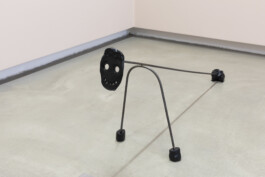
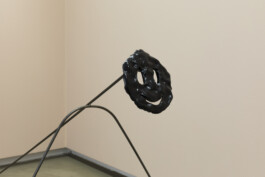
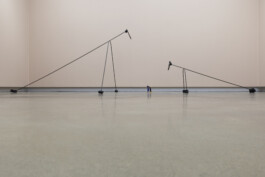
To make visible the significance of space in the artistic process, Stützer-Tóthová preserves the studio situation for the exhibition, showing what her daily life and working process looked like over the preceding weeks. Her tools are scattered around, the books are gathered on a table, and alongside them four newly created clay plates - still unfired and unglazed as "works in progress". The four reduced symbols are borrowed from cultural-historical narratives that speak to the centuries-old struggle for emancipation…(Text written by Melina Mercer)
Der Raum diktiert die Größe/The space dictates the size
DieResidenz/ Berlin, 2026
She leaps for joy. With this image, Magda Stützer-Tóthová invites viewers on the exhibition poster to the vernissage at DIEresidenz Berlin, where she — as an artist with a child — was given a studio space and an apartment for four weeks.
In the exhibition space, a large number of small drawings hang in a grid alongside near-life-sized images. The works created during her residency in Friedenau show organically rendered silhouettes, ranging in their degree of abstraction from biomorphic, cell-like forms to stylized heads in frontal or profile view. Usually only one or two colors are used per drawing. Alongside outlines, a few human features are worked out — such as hanging breasts with nipples, or eyes that always appear somewhat horrified.
The drawings, reduced to a few basic forms, are reminiscent of Willi Baumeister, who in Das Unbekannte in der Kunst proclaimed his search for so-called "primal forms," which he placed as culturally and temporally universal building blocks before any concrete depiction of a human body. But while his drawings were oriented toward harmony in composition and the relationship between pictorial elements, Stützer-Tóthová's figures devour, circle, and bite each other in an almost cannibalistic way. Whether in a high degree of abstraction - as in the drawing where three cell-like forms attempt to engulf one another - or more figuratively, with wide-open mouths and bared teeth seemingly about to bite into a penis, the figures are locked in a struggle. A struggle in which they are in unmistakably close relationship to one another, needing each other and consuming each other simultaneously. The drawings feel archaic - they could almost be Stone Age cave paintings - were it not for the fact that the motifs break shamelessly with every notion of a fertility symbol or maternal archetype. When viewing them, one senses that this series explores a state of the many ambivalent feelings experienced in motherhood.
Stützer-Tóthová accompanies her artistic work with a diary on Instagram, showing, for example, herself and the back view of her eight-year-old daughter brushing their teeth in the "new apartment". Other photos show the artist reading feminist literature in the rooms of the residency. She pairs her self-portraits with selected quotes from the books she is reading. Her feminist perspective can now be beautifully traced back through the drawings. She appropriates the visual language of classical modernism — a language clearly coded as white and male — in order to express, with great force and without apology, her anger and inner conflict. And this is precisely where the emancipatory moment lies. Are women allowed to be angry? May a mother struggle with being a mother, even as myths about innate maternal instincts stubbornly persist to this day? Unpaid care work is still invisible or ignored as a foundation of society. Women are expected to willingly and naturally care for children, perform emotional labor, and stabilize relationships within the family structure. Stützer-Tóthová rebels against this and uses her art as a tool of self-empowerment. And for that, she had the necessary space in January — more room to unfold, with her artistic materials and her literature.
Thus the exhibition bears the fitting title The Space Dictates the Size.
Many artist mothers give up studio spaces and work from home. This may seem like a win-win – removing the guilt-inducing choice between parenting time and studio time – but has an immediate impact both on the quality of time available and on the kind of work it is possible to make. The space available dictates the size of work, which shrinks from studio to domestic scale.
— Hettie Judah, How Not to Exclude Artist Mothers (and other parents), Lund Humphries Publishers Ltd 2023
To make visible the significance of space in the artistic process, Stützer-Tóthová preserves the studio situation for the exhibition, showing what her daily life and working process looked like over the preceding weeks. Her tools are scattered around, the books are gathered on a table, and alongside them four newly created clay plates - still unfired and unglazed as "works in progress". The four reduced symbols are borrowed from cultural-historical narratives that speak to the centuries-old struggle for emancipation…(Text written by Melina Mercer)